
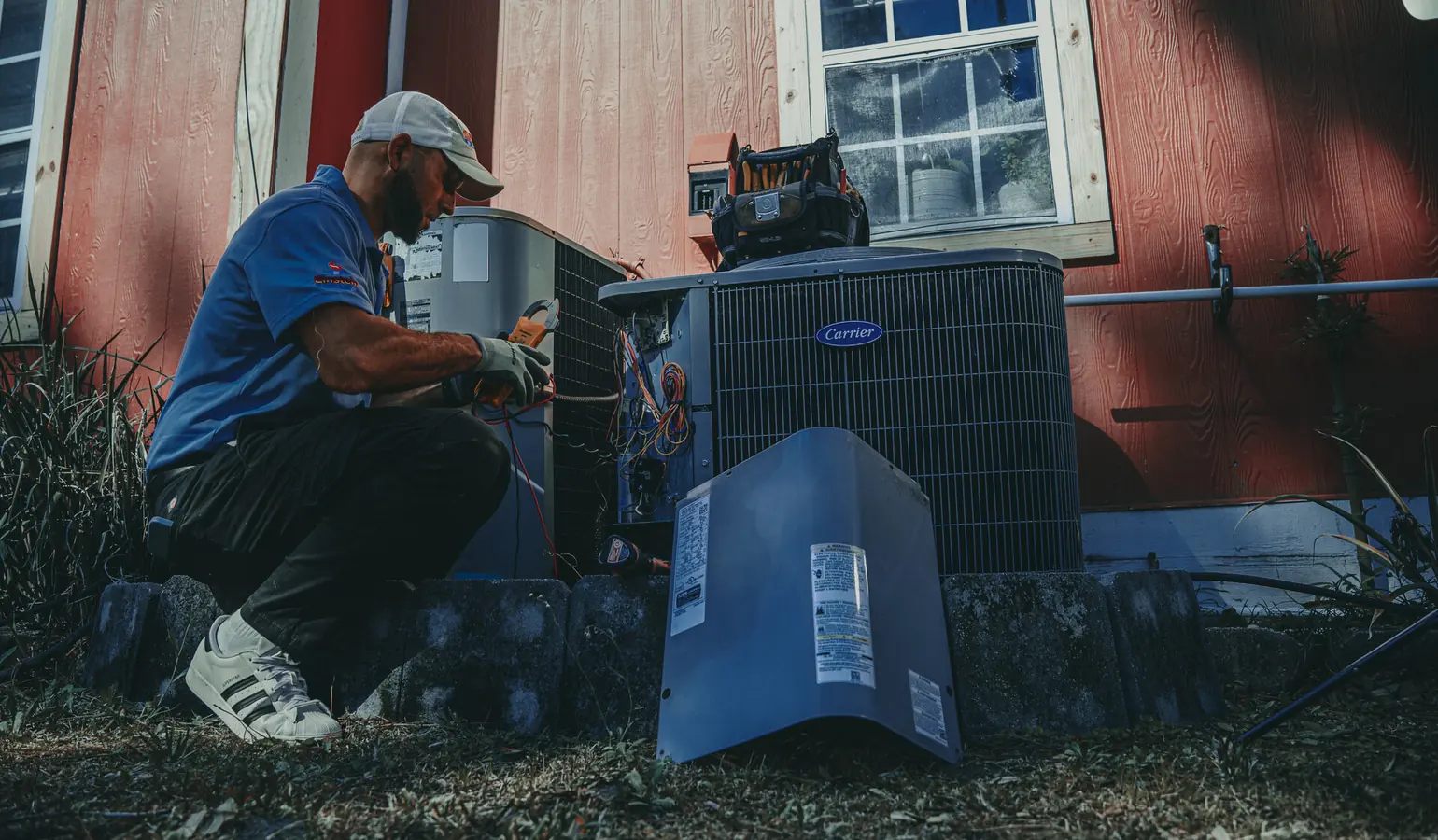
A new air conditioner is one of the biggest purchases most homeowners make, and in Jacksonville it is not optional for long. Our AC runs from spring to late fall, and a failing system in July is an emergency. This guide explains what a replacement costs in 2026, what drives the price, what changed with refrigerants and tax credits, and how to compare quotes so you get the right system at a fair price.
Typical AC replacement costs in Jacksonville (2026)
The ranges below include equipment, labor, removal of the old system and the permit. They are typical prices gathered from published 2026 cost guides for Jacksonville and national averages. Your price depends on your home, the equipment you choose and the condition of your current setup.
| Project | Typical installed cost | Notes |
|---|---|---|
| Central AC system, 2 to 3 tons | $4,500 – $9,000 | Smaller homes, condos and simpler installs |
| Complete split system (AC + new air handler) | $7,000 – $15,000+ | The most common full replacement in Jacksonville homes |
| Heat pump system, 3 tons | $6,500 – $13,000 | Cools and heats; popular in North Florida |
| Variable-speed or two-stage upgrade | +$500 – $2,000 | Over a single-stage system; better humidity control |
| New or replacement ductwork | +$2,000 – $5,000 | Only if your ducts are leaking, damaged or undersized |
For comparison, Angi puts the national average for an HVAC replacement at about $7,500, with most projects between $5,000 and $12,500. Many Jacksonville homes land in the middle or upper part of that range, because full replacements here usually include the indoor air handler, which often sits in a hot attic.
What affects the price of a new AC
1. System size (tons)
Air conditioners are sized in tons. A typical 2,000 square foot Jacksonville home often needs a system in the 3.5 to 4 ton range, but the right size comes from a load calculation (Manual J) that looks at insulation, windows, sun exposure and ductwork, not square footage alone. Bigger is not better: an oversized AC cools the air quickly and shuts off before it removes enough humidity, leaving the house cool but clammy.
2. Efficiency (SEER2) and compressor type
Since January 1, 2023, new central air conditioners installed in the Southeast, including Florida, must be rated at least 14.3 SEER2 for most home-size systems. Higher-rated equipment costs more up front and uses less electricity. Two-stage and variable-speed systems also run longer at lower speed, which removes more moisture from the air and keeps temperatures more even, a real advantage in our humid climate.
3. Refrigerant
New residential split systems are now built for lower-impact refrigerants such as R-454B or R-32. In 2026 the EPA finalized a rule that lets contractors keep installing R-410A units built before January 1, 2025, until existing stock runs out. R-410A is being phased down, so refrigerant for future repairs on those systems is likely to get more expensive. A new-refrigerant outdoor unit also needs a matching indoor coil rated for that refrigerant, so it cannot simply be connected to an old R-410A coil.
4. Replacing the indoor unit too
Most systems in Jacksonville are split systems: an outdoor condenser and an indoor air handler or coil, often in the attic or a closet. Replacing both together costs more than the outdoor unit alone, but it gives you a matched system that reaches its rated efficiency and qualifies for the full manufacturer warranty. If the indoor unit is as old as the outdoor one, replacing only half usually means a second bill a few years later.
5. Ductwork and installation details
Leaky or crushed ducts waste a large share of the cooling you pay for. If your ducts are in poor shape, sealing or replacing them adds cost but often fixes hot rooms and high bills that a new AC alone would not. Other details that move the price include attic access, a new pad or hurricane tie-downs for the outdoor unit, electrical updates, new refrigerant lines, drain line safety switches and a new thermostat.
6. Brand, warranty and the installer
Equipment brand matters less than many people think. Installation quality, correct sizing and refrigerant charge, and a solid labor warranty affect how long a system lasts and how well it works. Ask what the manufacturer warranty covers, how long the labor warranty is and who you call if something goes wrong.
Want a written price for your home?
We offer free in-home estimates for AC replacement across Jacksonville, with flat-rate pricing and financing with approved credit.
AC or heat pump?
Jacksonville winters are mild, which makes a heat pump a strong choice for many homes. A heat pump looks and works like an AC in summer but can also run in reverse to heat your home in winter, usually more efficiently than electric heat strips. In many homes, a heat pump system costs about the same as a comparable AC system, so it is worth comparing both when you replace. Homes with gas can also consider a dual-fuel system.
Rebates, tax credits and financing in 2026
- Federal tax credit: the 25C Energy Efficient Home Improvement Credit, which offered up to $2,000 for qualifying heat pumps, was repealed for equipment placed in service after December 31, 2025. It does not apply to systems installed in 2026.
- Utility rebates: JEA has offered rebates for qualifying high-efficiency AC and heat pump systems. Amounts, efficiency requirements and deadlines change from one program year to the next, so check JEA's rebate page before you buy. If your power comes from another utility, such as Beaches Energy Services or FPL, check its programs instead.
- Financing: Einstein Air offers flexible financing with approved credit, so you can replace a failing system now and pay over time.
When to replace instead of repair
A new system makes sense when one or more of these are true:
- The system is more than 10 to 15 years old and needs a major repair, such as a compressor or coil.
- It still uses R-22 refrigerant, which has not been produced in the U.S. since 2020.
- It needs repairs every season and your energy bills keep rising.
- Some rooms never get comfortable or the house stays humid even when the AC runs.
Our AC repair cost guide explains two simple rules (the 50% rule and the $5,000 rule) that help you decide, and our article on the warning signs your AC is about to fail covers what to watch for.
How to compare AC replacement quotes
- Ask how the system was sized. A good contractor measures your home instead of copying the size of the old unit.
- Compare matched systems. Each quote should list the outdoor and indoor model numbers and the SEER2 rating of the matched pair (you can check it in the AHRI directory).
- Check what is included: permit, removal of the old equipment, refrigerant lines, pad, drain safety switch, thermostat and any duct work.
- Get warranties in writing, both the manufacturer parts warranty and the installer's labor warranty.
- Verify the license. Florida HVAC contractors are licensed by the DBPR. Einstein Heating & Air Conditioning holds license CAC1824191.
Frequently asked questions
How much does it cost to replace an AC unit in Jacksonville in 2026?
Most complete split-system replacements, with a new outdoor unit and a matching indoor air handler, fall between about $7,000 and $15,000 installed. Smaller AC-only systems can start around $4,500, while high-efficiency variable-speed equipment and new ductwork push the price higher. A written quote after an in-home visit is the only way to know your exact price.
Can I replace just the outdoor AC unit?
Sometimes, if the indoor coil is in good condition, the right size and rated for the new unit's refrigerant. New systems now use refrigerants such as R-454B or R-32, which need a matching indoor coil, and air handlers in hot Florida attics often wear out along with the outdoor unit. Replacing both together is usually the better long-term choice and keeps the system matched for its rated efficiency and warranty.
Is there a federal tax credit for a new AC in 2026?
No. The federal Energy Efficient Home Improvement Credit (25C) was repealed for equipment placed in service after December 31, 2025. Utility rebates may still be available, so check with JEA or your electric utility before you buy.
Do I need a permit to replace my AC in Jacksonville?
Yes. Replacing a central AC or heat pump requires a mechanical permit and an inspection. A licensed HVAC contractor pulls the permit, and its cost is normally included in the quote. Ask your contractor to confirm it is included.
How long does AC replacement take?
A straight swap of an existing system usually takes one day. Jobs that include new ductwork, moving equipment or electrical upgrades can take two or three days.
Is a higher SEER2 rating worth the extra cost in Jacksonville?
Often, yes. Air conditioners in Northeast Florida run for most of the year, so efficiency pays back faster than in cooler climates. A system rated around 15 to 17 SEER2 is a strong value for most homes, and variable-speed systems cost more but remove more humidity and run more quietly.
Ready to replace your AC?
Free in-home estimates, written flat-rate quotes and financing with approved credit. Licensed Florida contractor #CAC1824191.
Learn more about our AC replacement service or schedule a free estimate. We replace AC systems across Jacksonville, including Mandarin, San Marco, Jacksonville Beach and Ponte Vedra Beach.
